Slaid — Building an AI SaaS and getting Acquired
Reached $1,000 MRR and had 5,000 monthly visits.
Context
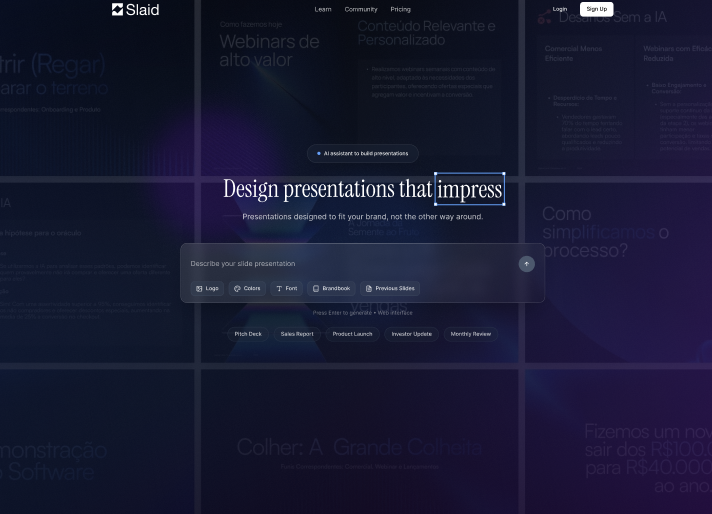
Slaid is an AI tool designed to generate presentations from user input.
An initial MVP was launched to explore the space, following a general-purpose approach to presentation creation.
Problem
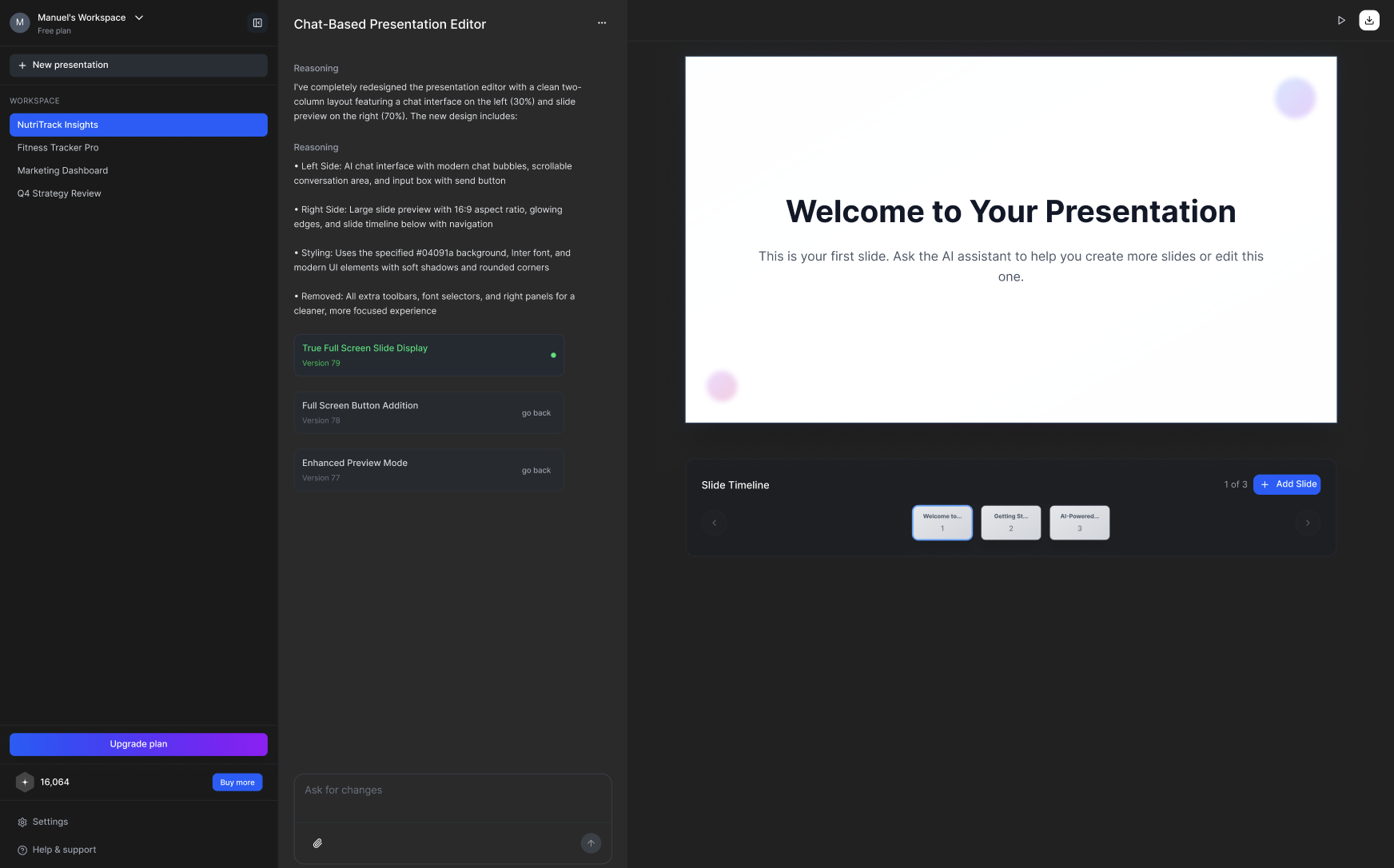
The first version of the product attempted to serve a broad use case: creating presentations of any kind.
This introduced several issues:
- The product lacked a clear focus
- Users faced too many decisions
- The experience felt generic and unfocused
As a result, users struggled to understand the value and dropped off early.
Research
To better understand user needs, I conducted a series of user conversations and feedback sessions.
A consistent pattern emerged:
- Users were not looking for a general presentation tool
- The most valuable use case was highly specific
- Many users wanted to turn structured data into clear presentations
Users repeatedly mentioned the need to transform Excel data into presentation-ready outputs.
Insight
The core problem wasn’t how to improve the editor.
It was that the product was solving the wrong problem.
Users didn’t want flexibility — they wanted a specific outcome.

Reframing the product
Based on these findings, the product direction shifted.
Instead of a general presentation tool, Slaid was repositioned as:
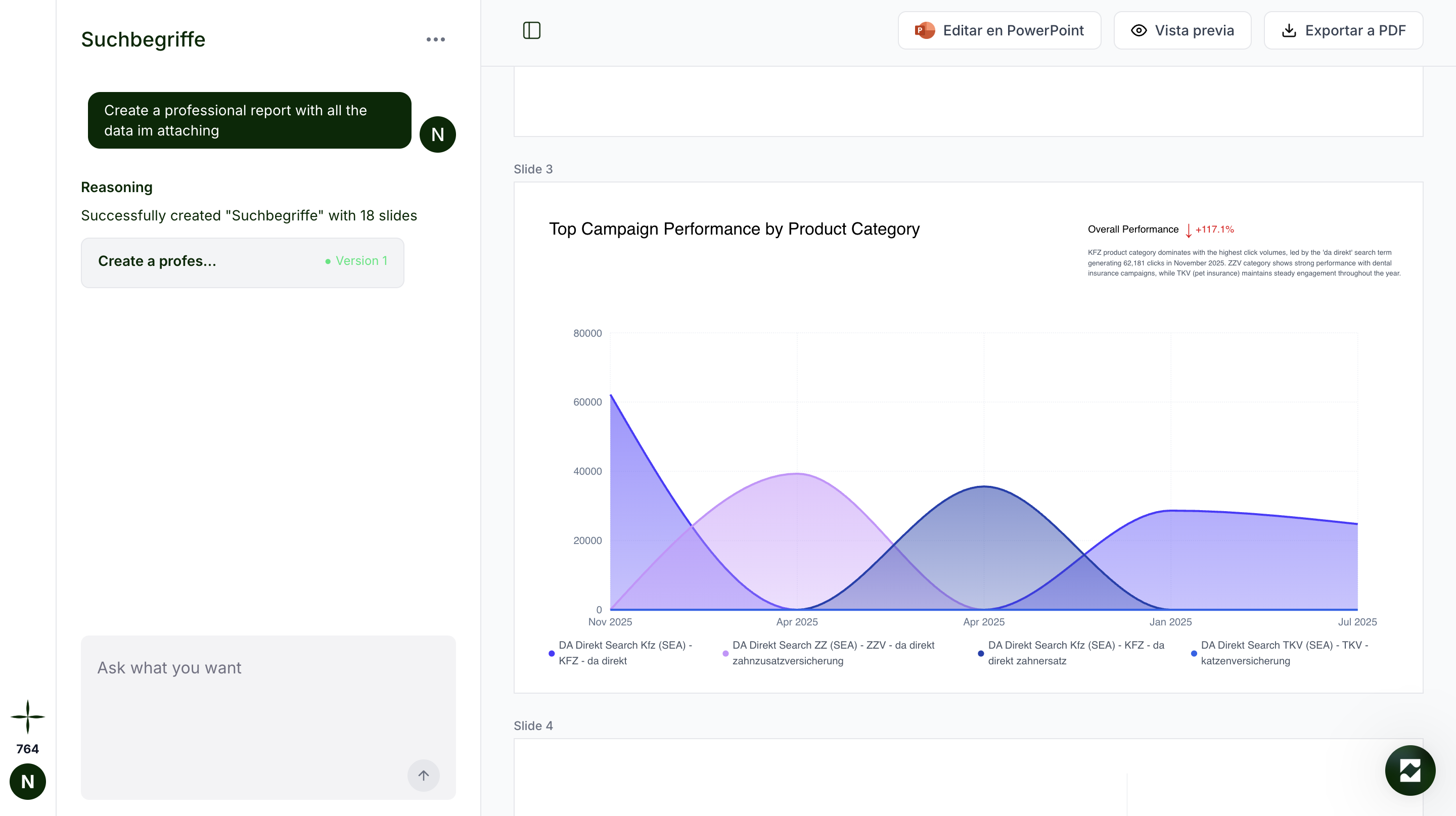
A tool to convert structured data (e.g. Excel) into presentation-ready slides.
This reduced ambiguity and aligned the product with a clear user need.
Approach
The redesign focused on:
- Narrowing the scope to a specific use case
- Reducing user decisions
- Structuring the experience around input → output
Rather than supporting multiple workflows, the product was rebuilt around a single, focused flow.
Key decisions
- Shifted from general-purpose presentations to data-driven presentations
- Introduced Excel/file-based input as a primary entry point
- Simplified the interface to reduce unnecessary choices
- Focused on automatic structuring of content
Each decision aimed to make the product more predictable and easier to use.
Before / After
Before
- Generic presentation tool
- Multiple possible use cases
- High ambiguity and friction
After
- Clear use case (data → presentation)
- Structured input (Excel, data)
- Direct and focused experience
The product moved from being flexible to being specific.
Outcome
The repositioning and redesign led to measurable improvements:
These results were driven by aligning the product with a clear and relevant user need.